
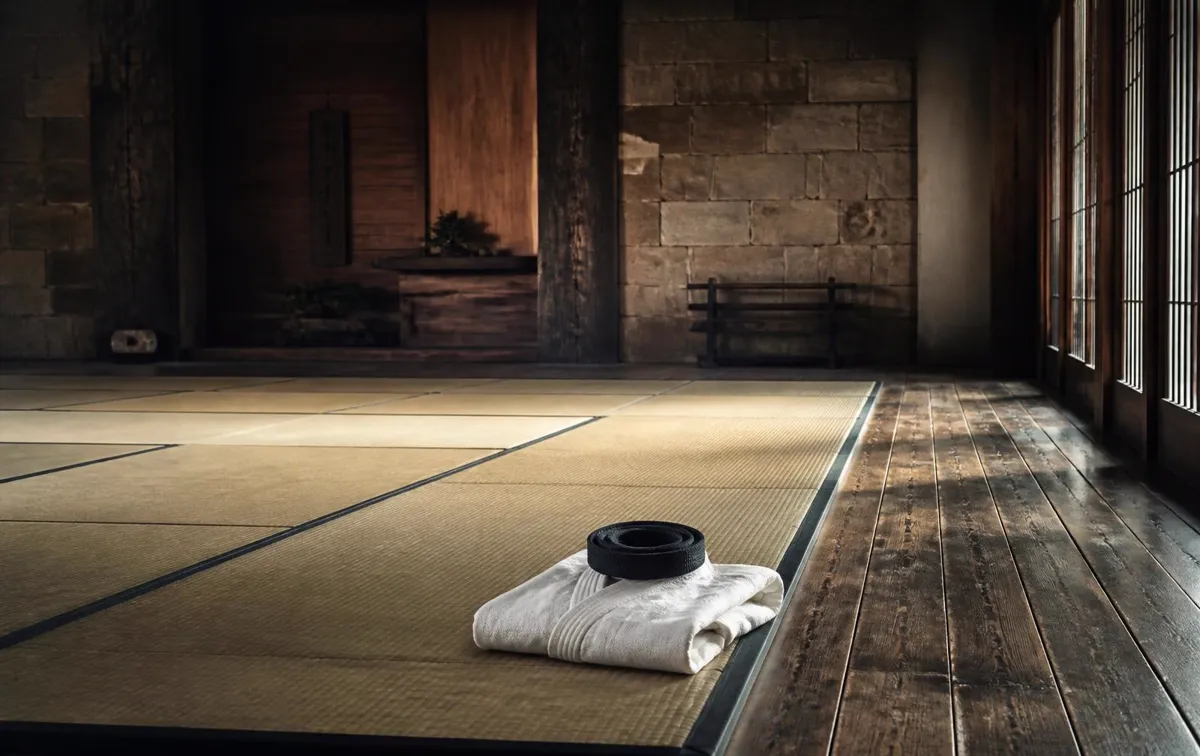
Many people know that outside of work I practice martial arts at what I believe is one of the finest dojos in Georgia, Cumming Martial Arts. The style is Yondo Jiu Jitsu, which translates to Four Way Flexible Art.
Like most students who walk through the dojo doors for the first time, I had enthusiasm, determination, and a willingness to learn. What I did not have was decades of experience. Fortunately, I had instructors who did.
Over the years, I have been privileged to learn from Senseis who have dedicated their lives to studying multiple martial arts disciplines. They have spent decades refining their techniques, learning from other masters, competing, teaching, and continuously improving their craft.
Today, I consider many of them friends and extended family. But on the mat, they are still my instructors.
What makes them exceptional is not simply that they have earned black belts. It is that they can watch twenty different students perform the same technique and immediately recognize that each one needs something different. One student needs better balance. Another needs better timing. Someone else needs more confidence. Another simply needs to slow down.
Each student is pursuing the same destination, but no two journeys are exactly alike.
Practice makes permanent
One phrase you will hear often in martial arts is: practice makes permanent. Notice it does not say practice makes perfect.
If you repeatedly practice the wrong technique, you are simply reinforcing bad habits. Those habits become permanent, making them increasingly difficult to correct over time.
That is why experienced instruction matters. A great Sensei does not stand on the sidelines shouting advice. They get on the mat. They demonstrate the technique. They grapple with you. They spar with you. They allow you to experience the movement correctly so you can recognize what success feels like.
Their experience allows them to see subtle mistakes that the student simply cannot see for themselves.
Operations develop habits too
Supply chain leadership is not much different. Most organizations are not struggling because they lack talented people. Quite the opposite. They have experienced leaders, dedicated teams, established processes, and sophisticated technology.
Yet over time, organizations develop habits. Processes become routine. Workarounds become accepted. Technology becomes underutilized. Teams become so focused on executing today's priorities that they lose the opportunity to rethink tomorrow's possibilities.
Just like practicing an imperfect martial arts technique, operational habits become permanent unless someone with experience recognizes the opportunity for improvement.
That is where an experienced operator advisor creates value. Not by replacing your team. Not by criticizing your organization. But by bringing decades of operational experience to identify opportunities that those closest to the work may no longer see.
Practitioners first
At Summit Advisory Team, we believe the best advisors are practitioners first. We have led supply chain organizations. We have implemented warehouse management systems and automation. We have redesigned distribution networks. We have navigated labor shortages, customer expectations, mergers, rapid growth, and operational transformation. We have made difficult decisions, learned from mistakes, and celebrated successful outcomes.
In martial arts, there is another important lesson. A Sensei never asks a student to perform a technique they are not willing to demonstrate themselves.
That philosophy defines how we work. We do not hand over a presentation and disappear. We get on the mat with our clients. We work alongside their teams. We help solve problems together. We coach leaders through difficult decisions. We stay engaged through implementation because execution, not recommendations, is what ultimately creates lasting results.
No two journeys are the same
Every organization's supply chain journey is different. Some are preparing for rapid growth. Others are implementing new technology. Some need to redesign their network. Others are looking to improve service, reduce costs, or create greater resilience. There is no one size fits all path.
Just as every martial artist develops at a different pace, every organization requires coaching that reflects its unique strengths, challenges, and goals.
Our role is not to fight the match for you. Our role is to help you become stronger, faster, more disciplined, and more effective, so your supply chain becomes a true competitive advantage.
Because in both martial arts and supply chain leadership, excellence is not achieved through talent alone. It is achieved through disciplined practice, experienced guidance, and a coach who is willing to step onto the mat beside you.